The Dirtiest, Most Sincere Cat-Girl Comedy of Summer 2026
Meet Yani. She’s a cat girl. She smells like smoke; her apartment is a biohazard, and she’s been fired from every job she’s ever had. Chain smoker Cat, adapted from Nyan Nyan Factory’s manga, premiered in July 2026—and it’s not here to make you feel good.
This Is Not a Healing Anime. It’s the Opposite.
The first two minutes tell you everything: a jar of tobacco-soaked spit water dumped on a bald man’s head, a middle-aged landlord masturbating in frustration, and a cat-girl having explosive diarrhea rendered in loving detail. If you survive those two minutes, you’ll probably keep watching. If not, you’ll completely understand why some Japanese viewers dropped the show after episode one.
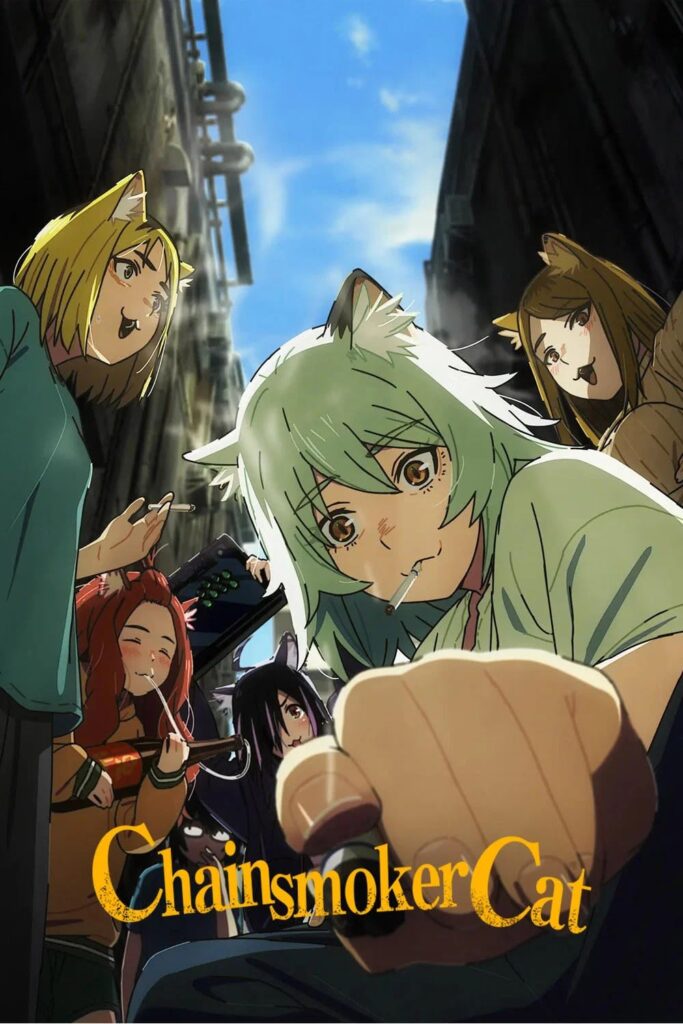
But Chainsmoker Cat was never designed to be comfortable. Yani is a complete “girl failure”: lazy, selfish, incapable of self-reflection, blaming everyone but herself for her problems. Her friend Yaku is addicted to hard drugs, outwardly glamorous but consumed by guilt. Another friend, Hame, is a game streamer who plays the perfect cute idol online but is a rage-filled, bullied wreck in reality.
Each character escapes reality in her own way. Yani chose cigarettes. Yaku chose drugs. Hame chose a virtual persona. And the show uses the crudest, most direct jokes to tell you: they’re all the same.
Animation: Filthy, But Exquisite
Director Taku Kimura (who worked on Star Wars: Visions’ “Tatooine Rhapsody”) helms the project at Bibury Animation Studios, with music by Keiichi Suzuki (Saint Young Men, Tokyo Godfathers). The animation treats “filth” with strange dedication—every ashtray, every scattered cigarette butt; every stain in Yani’s apartment gets meticulous attention. That investment in detail is itself a statement: we’re not beautifying anything.
Yūko Natsuyoshi voices Yani, nailing that “I know I’m destroying myself, but I genuinely don’t care” tone.
Controversy and Popularity, Hand in Hand
Chainsmoker Cat generated significant controversy in Japan. Some viewers felt it glamorized smoking and unhealthy lifestyles. Reports emerged that Hong Kong’s streaming platforms pulled the anime due to local restrictions on online tobacco advertising.
Meanwhile, manga sales exploded. Kodansha announced full-volume reprints, with the Young Magazine editorial department stating they “received a large number of reports of sold-out bookstores,” and the editor-in-chief thanked “all the readers and viewers who embraced these truly filthy characters.”
The controversy is part of the work. Those who love it see an honest portrayal of “failures” and a rebellious refusal to be “healed.” Those who hate it see a nihilistic swamp with no redemption, no growth, just endless gross-out jokes.
So, Should You Watch It?
Simple test: watch the first two minutes and fifteen seconds of episode one. If you’re not scared off and instead think “this is kind of interesting,” the show is for you. If you’re the type who gets angry watching characters self-destruct without changing, skip it—Yani won’t get better. This isn’t that kind of story.
Chainsmoker Cat doesn’t heal, doesn’t preach, doesn’t try to make you feel good. It just puts a group of people you’d never want to know in front of you, then lets you realize during some absurd joke: they’re not that far from you.