Author: Yi Sha

  • Magi: The Labyrinth of Magic

    The Arabian Nights Epic That Went Far Beyond Its Anime 

    Magi starts as a colorful adventure about a boy with a flute and a dungeon. It ends as a philosophical war about free will, godhood, and whether utopia is worth the price of being human. 

    The Setup: Aladdin, Alibaba, and a World of Dungeons 

    The story follows Aladdin, a mysterious boy with a djinn named Ugo trapped in his flute, and Alibaba Saluja, a young man dreaming of conquering a dungeon and striking it rich. They meet in a desert oasis, team up to clear the dungeon of Amon, and walk out with power, treasure, and a freed slave named Morgiana. 

    But the real hook comes when the djinn reveals Aladdin is a Magi—a rare magician born to choose kings and guide them toward a righteous path. Alibaba is his first candidate. From there, the story expands outward: to the merchant nation of Balbadd, the magical kingdom of Sindria, the scholar-city of Magnostadt, and eventually the moon itself. 

    Ohtaka builds her world from One Thousand and One Nights, but she doesn’t just borrow names. She takes the aesthetic—deserts, flying carpets, djinn, grand palaces—and uses it to tell a story about colonialism, class, and the stories we tell ourselves about destiny. 

    The Rukh System: How Magic Works, and Why It Matters 

    Magi has one of the most thematically loaded magic systems in shonen. Everything runs on Rukh, the flow of souls that connects all living things. Magicians burn their own Magoi to cast spells. Magi can draw on the Rukh of the world itself, making them almost godlike. 

    But the twist is that Rukh can turn black. Falling into “depravity”—cursing your own fate—turns white Rukh black, and black Rukh is the power source for Al-Thamen, the series’ main antagonist organization. This isn’t just a good-versus-evil mechanic. It’s a statement: the system itself punishes you for despairing. And eventually, the series asks whether that system deserves to exist at all. 

    The Manga’s Endgame: A War of Ideologies 

    This is where Magi becomes something special. After the anime’s ending, the story escalates into a full-scale ideological conflict between Sinbad and Aladdin—two characters who both want peace but fundamentally disagree on what that means. 

    Sinbad, the legendary Dungeon Capturer and King of Sindria, decides the only way to end war forever is to unify all Rukh—essentially erasing individual will and making everyone want the same thing: peace. Aladdin, the Magi who believes in freedom and choice, opposes him. Neither is evil. Both want a better world. And that’s the tragedy. 

    The final arc involves David, Solomon’s father, who hijacks Sinbad’s plan to reduce all existence to Rukh and devour it. Aladdin and Alibaba fought to stop him. In the end, Sinbad sacrifices himself to destroy David, the Magi system is dismantled, and the world is rebuilt without gods or chosen kings. 

    The final chapter, “Wishes,” ends with Alibaba marrying Morgiana in a ruined but free world. It’s messy, imperfect, and hopeful in a way that feels earned. 

    Why It Still Matters 

    Magi is one of the few shonen series that genuinely interrogates its own power fantasy. It gives you dungeon-crawling, djinn equips, and flashy battles—then asks whether the entire system of kings and Magi is just another cage. It builds a world of incredible beauty and then lets it nearly end. 

    If you loved the anime and never picked up the manga, you’re missing the story’s actual point. The anime is an invitation. The manga is a conversation. 
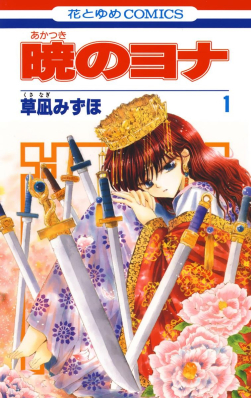
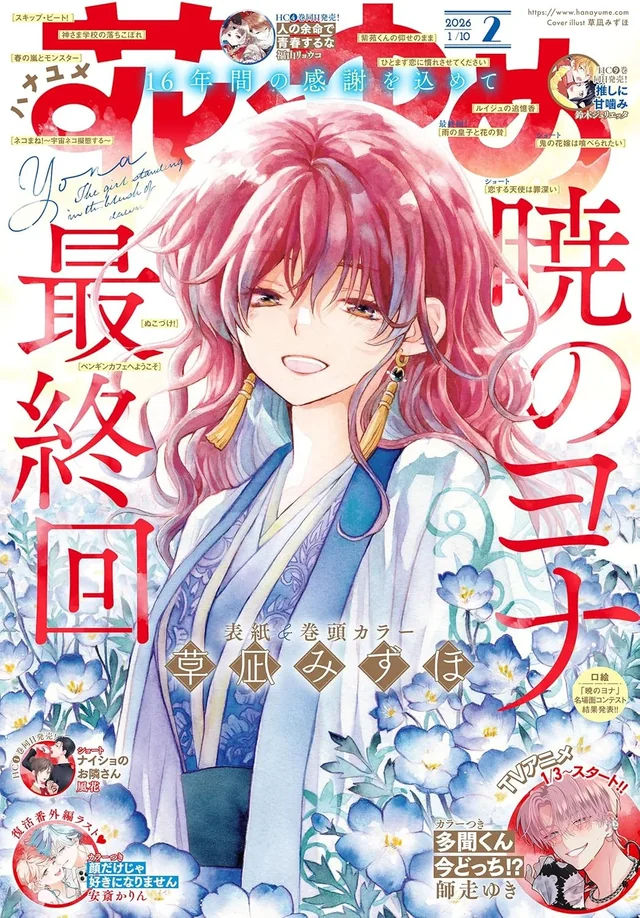
  • Akatsuki no Yona / Yona of the Dawn

    The Shojo Epic That Refuses to Stay in Its Lane 

    Most shojo manga start with a girl and a boy. Yona of the Dawn starts with a girl and a severed head. Well, almost, the severed head belongs to her father, and the boy holding the sword is the cousin she’s loved since childhood. It’s a brutal opening that signals exactly what kind of story this is: one that takes the trappings of a princess fantasy and sets them on fire. 

    The Setup: From Pampered Princess to Fugitive 

    Yona is the sole princess of Kouka Kingdom, a red-haired girl who has spent sixteen years being doted on by her father, King Il, and protected by her childhood friend and bodyguard, Son Hak. She’s naive, sheltered, and completely unaware of the kingdom’s deteriorating state. Her world revolves around Su-won, her cousin and first love, and the comfortable certainty that nothing will ever change. 

    Then Su-won kills her father in front of her, and everything changes. 

    Yona flees the castle with Hak, the “Thunder Beast” of the Wind Tribe, a man whose combat skills are so legendary he’s called “the strongest soldier in Kouka”. What follows isn’t a quick revenge arc. It’s a slow, painful process of a girl learning to survive in a world she never knew existed. 

    The Journey: Finding Dragons, Finding Herself 

    The story’s central quest is straightforward: Yona must find the four Dragon Warriors—legendary protectors who served the original Crimson Dragon King two thousand years ago. A prophecy says they will protect her, and she needs that protection if she’s going to survive. 

    Each dragon brings something different. Kija, the White Dragon, has a claw that can cut through anything but is emotionally sheltered and clashes immediately with Hak. Shin-ah, the Blue Dragon, has eyes that paralyze and kill, and has lived in isolation his entire life. Jae-ha, the Green Dragon, can leap impossibly high and escaped captivity to live with pirates, bringing a flamboyant, teasing energy to the group. And Zeno, the Yellow Dragon, is something else entirely; the original immortal who served the first king, cheerfully hiding centuries of sorrow behind a smile. 

    What makes these characters work isn’t just their powers. It’s how they change Yona. Kija’s earnest loyalty forces her to accept responsibility. Shin-ah’s loneliness mirrors her own. Jae-ha’s refusal to be bound teaches her about freedom. And Zeno’s immortality, eventually, becomes a key to understanding the entire mythology of the series. 

    Hak: The Man Who Was Always There 

    You cannot talk about Yona of the Dawn without talking about Hak. He’s the series’ secret weapon—a character who could easily have been a generic stoic bodyguard but instead becomes something far more complicated. 

    Hak has loved Yona since childhood, but he suppressed those feelings because he believed she would marry Su-won, and he was content to serve them both as their right hand. When Su-won betrays them, that future shatters, and Hak is left with a heartbreak; he never got to voice. He’s sarcastic, sharp-tongued, and protective to a fault, but his growth comes from learning to trust Yona’s strength instead of shielding her from everything. 

    Their relationship is the emotional spine of the series. It’s not a simple romance; it’s two people rebuilding their lives after the same catastrophe, learning to see each other differently, and slowly, painfully, admitting what they mean to each other. 

    Why the Manga Matters 

    The 2014 anime adaptation by Studio Pierrot covered 24 episodes, plus a few OVAs, and ended just as the story was getting started. It adapted roughly six story arcs—the Fugitive arc, the Prophecy arc, the Dragons arc, and a few more—which amounts to maybe 30% of the total narrative.

    The manga, written and illustrated by Mizuho Kusanagi, ran for sixteen years, concluding its main story in December 2025 and wrapping up with side stories in July 2026. It spans 48 volumes and has sold over 16 million copies worldwide. The final volume releases in Japan in October 2026, with Viz Media publishing the English translation. 

    For anime-only fans, this matters because the story continues far beyond where the anime stopped. Yona’s transformation from a helpless princess to a leader who negotiates with gods and commands armies happens across decades of manga chapters. The romance with Hak develops slowly, with confessions and misunderstandings and moments of genuine vulnerability that the anime never reached.  

    The Sequel Nobody Expected 

    In December 2025, alongside the manga’s final chapter, Hana to Yume magazine announced that a second season of the anime was in production. It’s been over ten years since the first season aired. In the meantime, Yona of the Dawn became a cult classic on Crunchyroll, gathering a devoted fanbase who never stopped hoping for a continuation. 

    The details are scarce. No release date, no studio confirmation, no key visual beyond a teaser image. But the fact that it’s happening at all is remarkable. Shojo fantasy anime rarely gets second chances after a decade of silence. 

    Should You Watch It? 

    If you’re tired of fantasy stories where the protagonist is instantly powerful, Yona of the Dawn offers something different. Yona starts weak. She starts naive. She starts as a girl who has never held a weapon and doesn’t know how to survive without servants. Watching her become someone else, someone harder, kinder, more capable, is the point. 

    It’s a story about what you do when the people you love become monsters. It’s about responsibility, about privilege, about learning that the kingdom you loved was built on things you never wanted to see. And it’s about a boy who would follow you into hell not because he was ordered to, but because he never imagined doing anything else. 

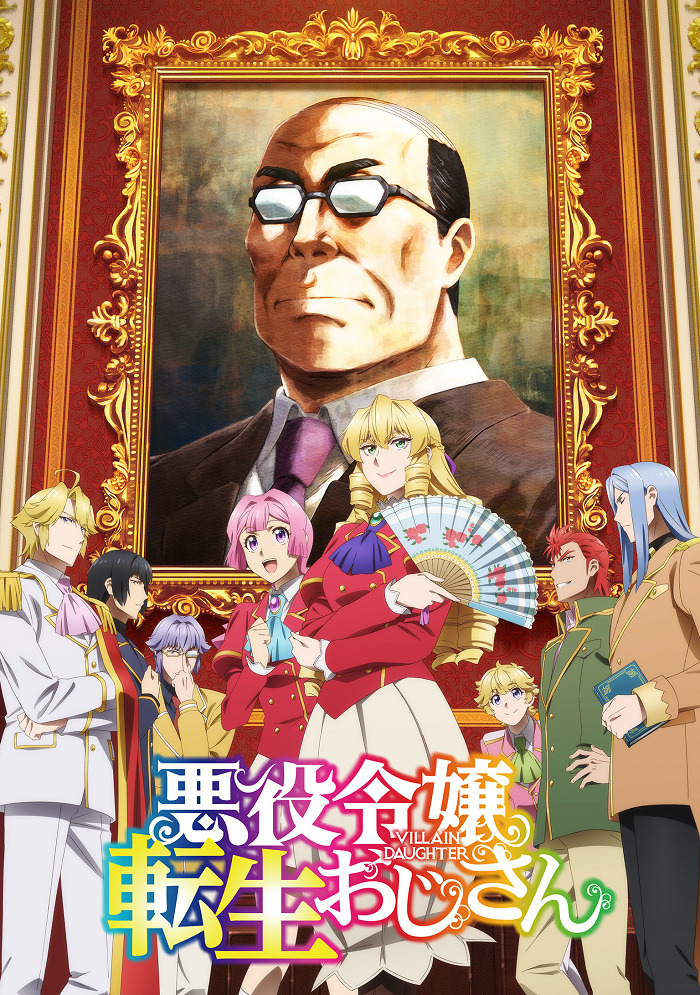
  • From Bureaucrat to Villainess: Dad’s Been Reincarnated!

    The Isekai That Proves Dad Skills Beat Magic 

    Most isekai protagonists are teenagers with cheat abilities. From Bureaucrat to Villainess: Dad’s Been Reincarnated! throws that formula out the window and replaces it with a 52-year-old civil servant whose greatest weapon is decades of workplace experience. 

    The Setup: A Truck, a Game, and a Very Confused Dad 

    Kenzaburo Tondabayashi is a diligent public employee who dies saving a young boy from traffic—the classic isekai truck, except this time the victim has a wife and daughter waiting for him. When he wakes up, he’s not in a fantasy world with a sword and a harem. He’s Grace Auvergne, the villainess from his daughter’s favorite otome game, Magical Academy: Love & Beast. 

    Grace is supposed to be cruel, haughty, and an obstacle to the game’s heroine, Anna Doll. Kenzaburo knows this because he’s watched his daughter play through the story countless times. The problem? He’s fundamentally incapable of being mean to a teenage girl. His paternal instincts kick in immediately, and he starts treating Anna like a daughter rather than a rival. 

    The “Elegant Cheat”: When Dad Energy Becomes a Superpower 

    Kenzaburo doesn’t get magical cheat abilities. Instead, he has something far more dangerous: the “Elegant Cheat,” a skill that translates his mundane, bureaucratic mannerisms into something refined and aristocratic. When he speaks plainly, it comes out elegant. When he tries to be rude, it registers as dignified. His decades of navigating office politics and dealing with difficult people translate perfectly into surviving a fantasy academy’s social minefield. 

    This is the show’s central joke, and it’s a good one. Every attempt Kenzaburo makes to follow the villainess script backfires spectacularly because his kindness and competence accidentally raise his popularity. He gives Anna parental advice, and she starts seeing him as a mentor. He acts reasonably, and the capture targets start falling for Grace instead. 

    The Real Emotional Core: A Family Watching from the Other Side 

    Here’s what elevates the series beyond a simple comedy premise. In the real world, Kenzaburo isn’t dead—he’s in a coma. His wife and daughter, both otaku themselves, discover that he’s trapped inside Magical Academy: Love & Beast, and they start playing the game to help guide him back home. They can’t communicate with him directly, but they can influence events, control his familiarity, and watch his progress. 

    This adds a layer of genuine warmth to the absurdity. The show isn’t just about a dad embarrassing himself in a fantasy world—it’s about a family working together across dimensions. The ending theme, a cover of “Matsuken Samba II” performed by the voice actors, hints at this: Kenzaburo has an internal persona wildly different from his dull bureaucrat exterior, and his family loves that side of him. 

    Should You Watch It? 

    If you’re tired of teenage isekai protagonists who solve everything with raw power, From Bureaucrat to Villainess offers something different. It’s a comedy about competence, kindness, and the unexpected value of life experience. Kenzaburo doesn’t win because he’s strong—he wins because he’s been navigating bureaucracy and family life for five decades. 

    The show doesn’t reinvent the otome isekai genre, but it finds a genuinely fresh angle within it. And sometimes, watching a middle-aged man accidentally become the most beloved girl in school is exactly what you need. 

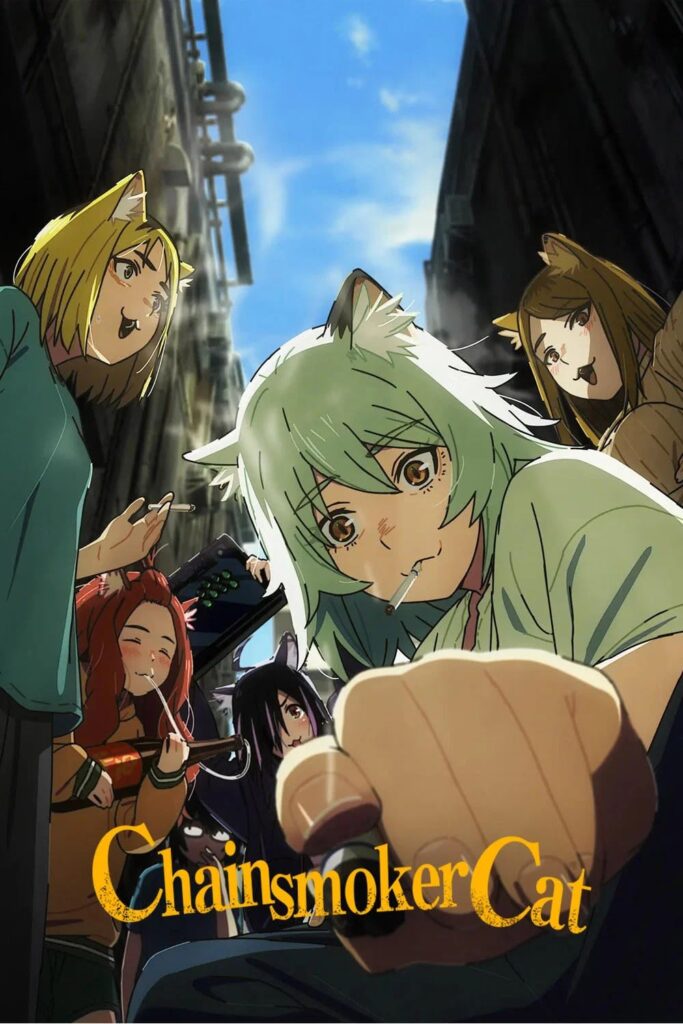
  • Chainsmoker Cat

    The Dirtiest, Most Sincere Cat-Girl Comedy of Summer 2026 

    Meet Yani. She’s a cat girl. She smells like smoke; her apartment is a biohazard, and she’s been fired from every job she’s ever had. Chain smoker Cat, adapted from Nyan Nyan Factory’s manga, premiered in July 2026—and it’s not here to make you feel good. 

    This Is Not a Healing Anime. It’s the Opposite. 

    The first two minutes tell you everything: a jar of tobacco-soaked spit water dumped on a bald man’s head, a middle-aged landlord masturbating in frustration, and a cat-girl having explosive diarrhea rendered in loving detail. If you survive those two minutes, you’ll probably keep watching. If not, you’ll completely understand why some Japanese viewers dropped the show after episode one. 

    But Chainsmoker Cat was never designed to be comfortable. Yani is a complete “girl failure”: lazy, selfish, incapable of self-reflection, blaming everyone but herself for her problems. Her friend Yaku is addicted to hard drugs, outwardly glamorous but consumed by guilt. Another friend, Hame, is a game streamer who plays the perfect cute idol online but is a rage-filled, bullied wreck in reality. 

    Each character escapes reality in her own way. Yani chose cigarettes. Yaku chose drugs. Hame chose a virtual persona. And the show uses the crudest, most direct jokes to tell you: they’re all the same. 

    Animation: Filthy, But Exquisite 

    Director Taku Kimura (who worked on Star Wars: Visions’ “Tatooine Rhapsody”) helms the project at Bibury Animation Studios, with music by Keiichi Suzuki (Saint Young Men, Tokyo Godfathers). The animation treats “filth” with strange dedication—every ashtray, every scattered cigarette butt; every stain in Yani’s apartment gets meticulous attention. That investment in detail is itself a statement: we’re not beautifying anything. 

    Yūko Natsuyoshi voices Yani, nailing that “I know I’m destroying myself, but I genuinely don’t care” tone. 

    Controversy and Popularity, Hand in Hand 

    Chainsmoker Cat generated significant controversy in Japan. Some viewers felt it glamorized smoking and unhealthy lifestyles. Reports emerged that Hong Kong’s streaming platforms pulled the anime due to local restrictions on online tobacco advertising. 

    Meanwhile, manga sales exploded. Kodansha announced full-volume reprints, with the Young Magazine editorial department stating they “received a large number of reports of sold-out bookstores,” and the editor-in-chief thanked “all the readers and viewers who embraced these truly filthy characters.” 

    The controversy is part of the work. Those who love it see an honest portrayal of “failures” and a rebellious refusal to be “healed.” Those who hate it see a nihilistic swamp with no redemption, no growth, just endless gross-out jokes. 

    So, Should You Watch It? 

    Simple test: watch the first two minutes and fifteen seconds of episode one. If you’re not scared off and instead think “this is kind of interesting,” the show is for you. If you’re the type who gets angry watching characters self-destruct without changing, skip it—Yani won’t get better. This isn’t that kind of story. 

    Chainsmoker Cat doesn’t heal, doesn’t preach, doesn’t try to make you feel good. It just puts a group of people you’d never want to know in front of you, then lets you realize during some absurd joke: they’re not that far from you. 

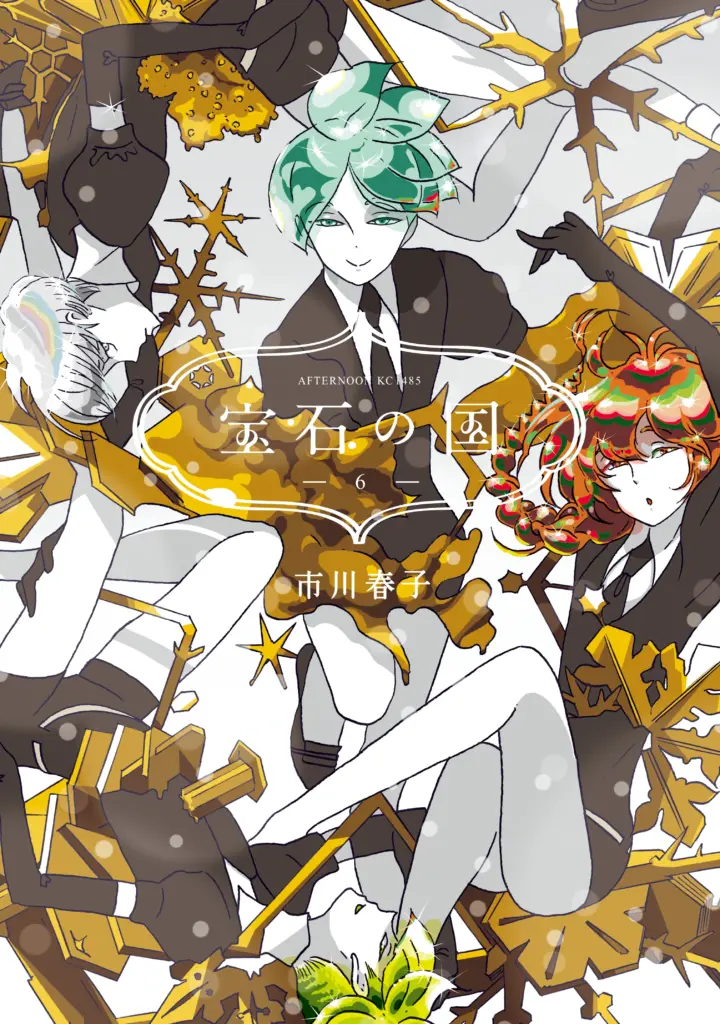
  • Houseki no Kuni / Land of the Lustrous

    Twelve Years of Breaking and Rebirth 

    If you only watched the 2017 anime, you’ve only seen the beginning of Phosphophyllite’s long journey. Haruko Ichikawa’s original manga officially concluded in April 2024, wrapping up twelve years of serialization and the story goes far deeper, far crueler, and ultimately far more serene than the anime ever showed.

    The Moon, Prayer, and the Weight of Truth 

    A mid-story twist completely reframes everything: Phos travels to the moon. The Lunarians, long treated as enemies, turn out to have language, reason, and a purpose far more complicated than decoration. The truth about Kongo-sensei’s inability to pray, the legacy of humanity’s extinction, and the revelation that humans split into three parts: bone, flesh, and soul elevates the gem-versus-Lunarian war into a meditation on existence itself. 

    Phos shuttles between the moon and the gems, trying to broker some kind of reconciliation or salvation, only to be shattered again and again by both sides’ indifference and betrayal. Former companions brand them a traitor; the Lunarians treat them as a tool. Ichikawa strips away every support Phos has, pushing the character toward some absolute limit in total isolation. 

    The Hiatus That Mirrored the Silence 

    The manga went on its first major indefinite hiatus after Chapter 95, published in the February 2021 issue of Monthly Afternoon. At that point, the story was already deep into Phos’s isolation arc. Ichikawa resumed serialization in June 2022, but the breaks didn’t stop there. 

    According to the fandom’s documentation, the “Pure New Land” arc—the final arc covering Phos’s solitude and eventual prayer—has the highest total hiatus time in the entire series: 29 months. These breaks were scattered across the arc: December 2020 to June 2022, then shorter pauses from August to November 2022, November 2022 to February 2023, April to August 2023, and finally October 2023 to February 2024. 

    The reasons were never fully explained. The official announcements cited “unspecified reasons” or simply “break”. Ichikawa has always been private, and the mangas production schedule was clearly taking a toll. What’s remarkable is that this real-world pause coincided almost perfectly with the narrative’s own frozen time—Phos sleeping through millennia, waiting for something to change, while readers waited for the next chapter to arrive. 

    The Weight of That Parallel 

    There’s something almost uncanny about it. Phos spent those years alone on a barren Earth, slowly transforming into something divine and unrecognizable. Meanwhile, the woman who created them was also absent, the story suspended mid-breath. Readers checking for updates month after month experienced a tiny fraction of what Phos endured: the uncertainty, the waiting, the question of whether things would ever move forward again. 

    The final chapters, where Phos wakes, meets the pebble lifeforms, and finds something like peace, arrived in 2024, alongside the announcement that the series would end in the June issue. The hiatus is over. Phos’s solitude was over. The story is closed. 

    Whether Ichikawa intended that parallel, or it emerged naturally from the production realities, it’s hard to ignore. The manga’s final arc isn’t just about Phos learning to exist alone. It’s also a document of a creator who stepped away, returned, and finally brought her character home. 

    Do I recommend this anime/manga?

    YES!