Tag: Action

  • Magi: The Labyrinth of Magic

    The Arabian Nights Epic That Went Far Beyond Its Anime 

    Magi starts as a colorful adventure about a boy with a flute and a dungeon. It ends as a philosophical war about free will, godhood, and whether utopia is worth the price of being human. 

    The Setup: Aladdin, Alibaba, and a World of Dungeons 

    The story follows Aladdin, a mysterious boy with a djinn named Ugo trapped in his flute, and Alibaba Saluja, a young man dreaming of conquering a dungeon and striking it rich. They meet in a desert oasis, team up to clear the dungeon of Amon, and walk out with power, treasure, and a freed slave named Morgiana. 

    But the real hook comes when the djinn reveals Aladdin is a Magi—a rare magician born to choose kings and guide them toward a righteous path. Alibaba is his first candidate. From there, the story expands outward: to the merchant nation of Balbadd, the magical kingdom of Sindria, the scholar-city of Magnostadt, and eventually the moon itself. 

    Ohtaka builds her world from One Thousand and One Nights, but she doesn’t just borrow names. She takes the aesthetic—deserts, flying carpets, djinn, grand palaces—and uses it to tell a story about colonialism, class, and the stories we tell ourselves about destiny. 

    The Rukh System: How Magic Works, and Why It Matters 

    Magi has one of the most thematically loaded magic systems in shonen. Everything runs on Rukh, the flow of souls that connects all living things. Magicians burn their own Magoi to cast spells. Magi can draw on the Rukh of the world itself, making them almost godlike. 

    But the twist is that Rukh can turn black. Falling into “depravity”—cursing your own fate—turns white Rukh black, and black Rukh is the power source for Al-Thamen, the series’ main antagonist organization. This isn’t just a good-versus-evil mechanic. It’s a statement: the system itself punishes you for despairing. And eventually, the series asks whether that system deserves to exist at all. 

    The Manga’s Endgame: A War of Ideologies 

    This is where Magi becomes something special. After the anime’s ending, the story escalates into a full-scale ideological conflict between Sinbad and Aladdin—two characters who both want peace but fundamentally disagree on what that means. 

    Sinbad, the legendary Dungeon Capturer and King of Sindria, decides the only way to end war forever is to unify all Rukh—essentially erasing individual will and making everyone want the same thing: peace. Aladdin, the Magi who believes in freedom and choice, opposes him. Neither is evil. Both want a better world. And that’s the tragedy. 

    The final arc involves David, Solomon’s father, who hijacks Sinbad’s plan to reduce all existence to Rukh and devour it. Aladdin and Alibaba fought to stop him. In the end, Sinbad sacrifices himself to destroy David, the Magi system is dismantled, and the world is rebuilt without gods or chosen kings. 

    The final chapter, “Wishes,” ends with Alibaba marrying Morgiana in a ruined but free world. It’s messy, imperfect, and hopeful in a way that feels earned. 

    Why It Still Matters 

    Magi is one of the few shonen series that genuinely interrogates its own power fantasy. It gives you dungeon-crawling, djinn equips, and flashy battles—then asks whether the entire system of kings and Magi is just another cage. It builds a world of incredible beauty and then lets it nearly end. 

    If you loved the anime and never picked up the manga, you’re missing the story’s actual point. The anime is an invitation. The manga is a conversation. 
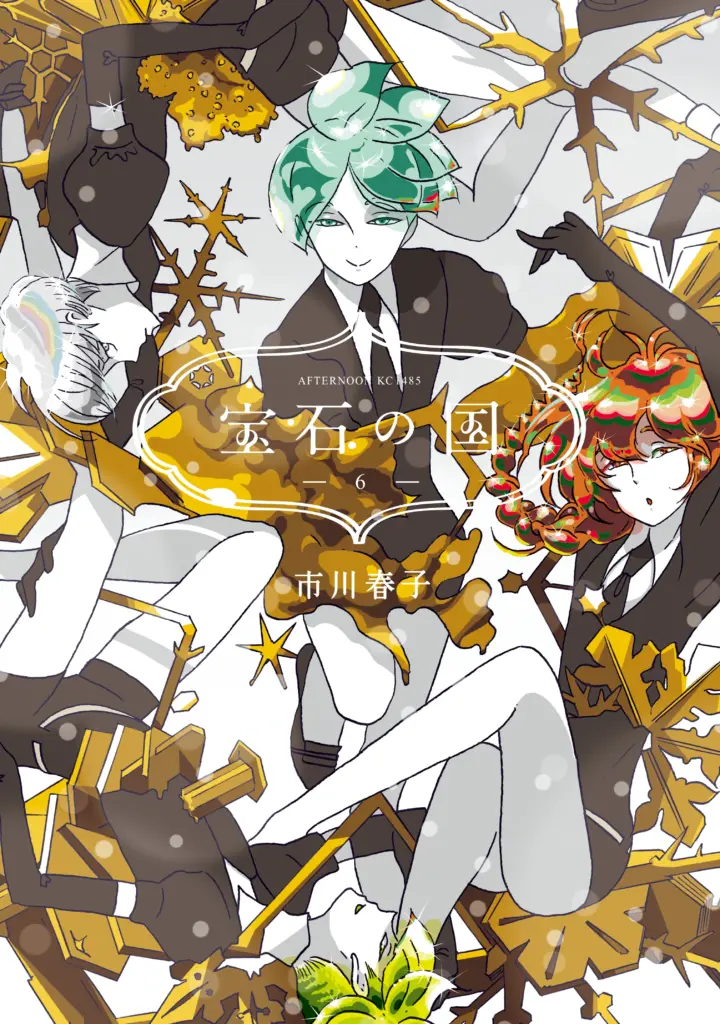
  • Houseki no Kuni / Land of the Lustrous

    Twelve Years of Breaking and Rebirth 

    If you only watched the 2017 anime, you’ve only seen the beginning of Phosphophyllite’s long journey. Haruko Ichikawa’s original manga officially concluded in April 2024, wrapping up twelve years of serialization and the story goes far deeper, far crueler, and ultimately far more serene than the anime ever showed.

    The Moon, Prayer, and the Weight of Truth 

    A mid-story twist completely reframes everything: Phos travels to the moon. The Lunarians, long treated as enemies, turn out to have language, reason, and a purpose far more complicated than decoration. The truth about Kongo-sensei’s inability to pray, the legacy of humanity’s extinction, and the revelation that humans split into three parts: bone, flesh, and soul elevates the gem-versus-Lunarian war into a meditation on existence itself. 

    Phos shuttles between the moon and the gems, trying to broker some kind of reconciliation or salvation, only to be shattered again and again by both sides’ indifference and betrayal. Former companions brand them a traitor; the Lunarians treat them as a tool. Ichikawa strips away every support Phos has, pushing the character toward some absolute limit in total isolation. 

    The Hiatus That Mirrored the Silence 

    The manga went on its first major indefinite hiatus after Chapter 95, published in the February 2021 issue of Monthly Afternoon. At that point, the story was already deep into Phos’s isolation arc. Ichikawa resumed serialization in June 2022, but the breaks didn’t stop there. 

    According to the fandom’s documentation, the “Pure New Land” arc—the final arc covering Phos’s solitude and eventual prayer—has the highest total hiatus time in the entire series: 29 months. These breaks were scattered across the arc: December 2020 to June 2022, then shorter pauses from August to November 2022, November 2022 to February 2023, April to August 2023, and finally October 2023 to February 2024. 

    The reasons were never fully explained. The official announcements cited “unspecified reasons” or simply “break”. Ichikawa has always been private, and the mangas production schedule was clearly taking a toll. What’s remarkable is that this real-world pause coincided almost perfectly with the narrative’s own frozen time—Phos sleeping through millennia, waiting for something to change, while readers waited for the next chapter to arrive. 

    The Weight of That Parallel 

    There’s something almost uncanny about it. Phos spent those years alone on a barren Earth, slowly transforming into something divine and unrecognizable. Meanwhile, the woman who created them was also absent, the story suspended mid-breath. Readers checking for updates month after month experienced a tiny fraction of what Phos endured: the uncertainty, the waiting, the question of whether things would ever move forward again. 

    The final chapters, where Phos wakes, meets the pebble lifeforms, and finds something like peace, arrived in 2024, alongside the announcement that the series would end in the June issue. The hiatus is over. Phos’s solitude was over. The story is closed. 

    Whether Ichikawa intended that parallel, or it emerged naturally from the production realities, it’s hard to ignore. The manga’s final arc isn’t just about Phos learning to exist alone. It’s also a document of a creator who stepped away, returned, and finally brought her character home. 

    Do I recommend this anime/manga?

    YES!